

Mt. Kilimanjaro Climbing Trip



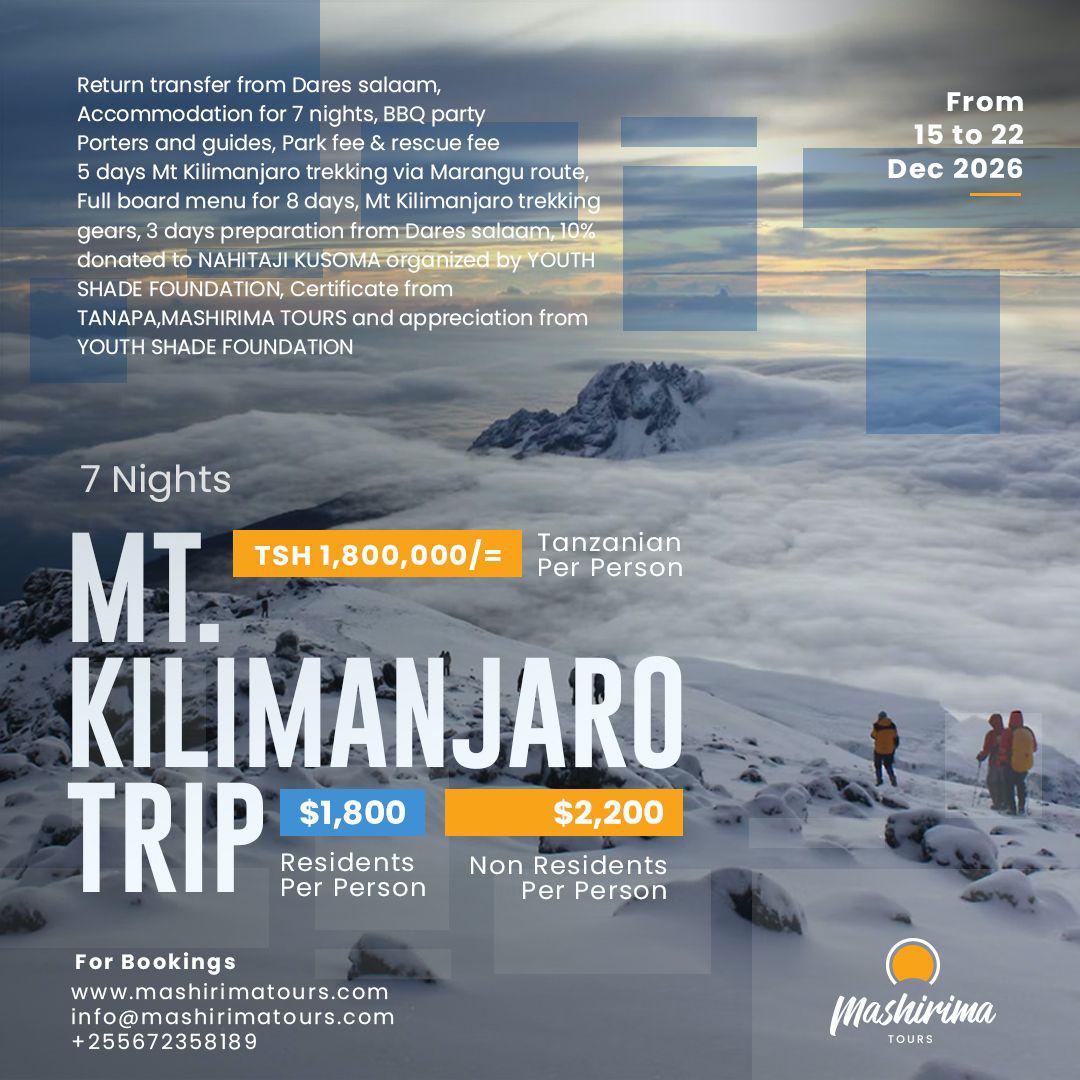
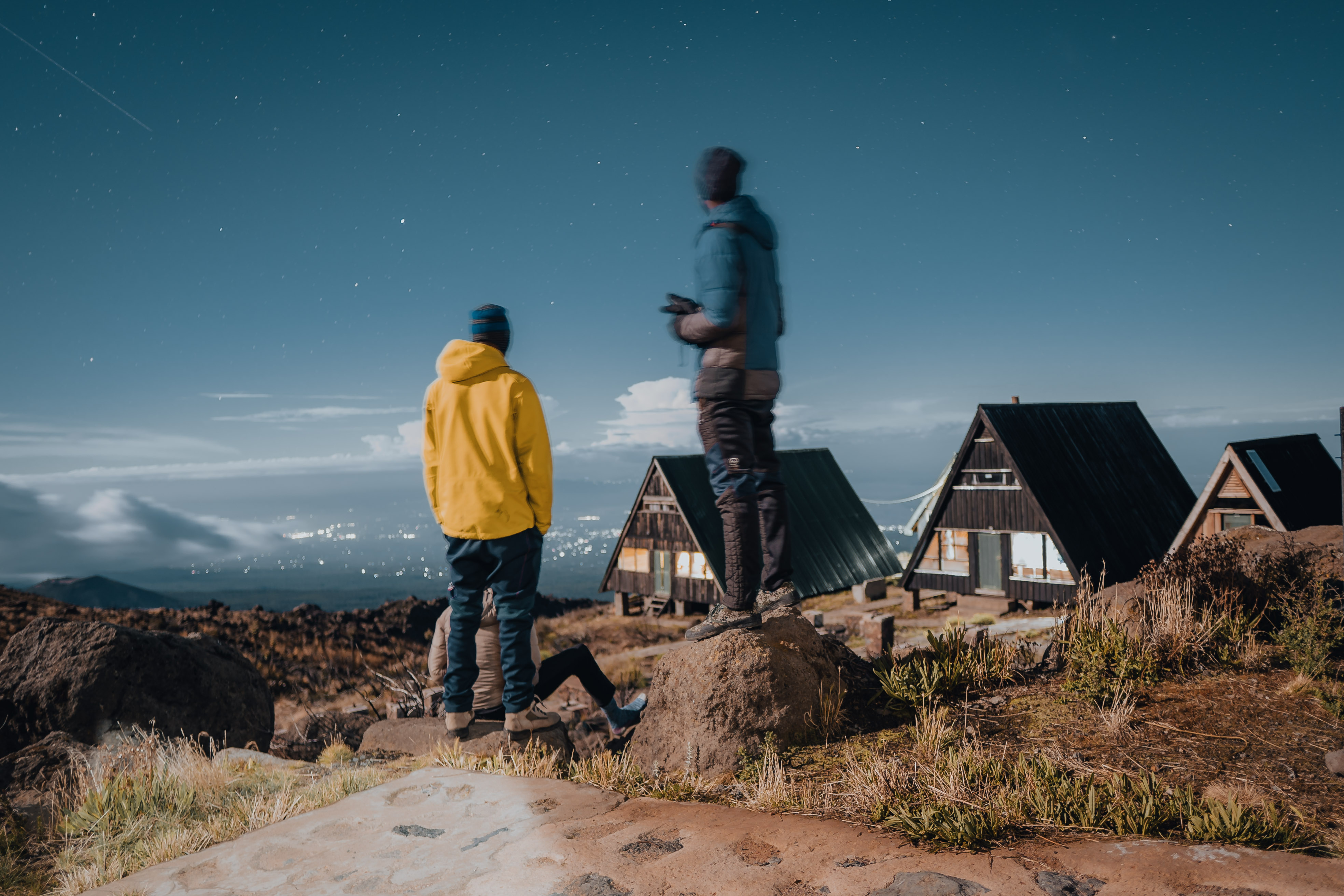
The Marangu route, which is also known as the Coca-Cola route, is the least expensive route to the summit. This is also the only route with the comforts of sleeping huts at every camp site with solar lights and comfortable beds.
The huts are communal, and the bunks have a sponge mattress and pillow.
There are 60 beds at both Mandara and Kibo Huts and 120 beds at Horombo Hut. Bathrooms and running water are available at the two lower huts. Mens’ and ladies’ latrines are available at the last camp but are very basic.
All climbing groups, often from several countries around the world, share meals in dining huts providing a jovial and energetic atmosphere.
This route is usually done in 5 days to 6 days (shortest route to the summit) but can be done in 6 days for better acclimatization. The extra day can be spent resting at Horombo or climbing the small peak of Mawenzi.
.JPG)
- Camping or Hut fees (part of park fees)
- Clean, purified drinking water
- Guides', porters', cooks' salaries, and park fees
- Emergency Oxygen Cylinder
- Sleeping Mattress
- All meals while on the Mountain
- Conservation fees (part of park fees)
- Professional, experienced, mountain guides
- Rescue fees (part of park fees)
- Large portions of fresh, healthy, nutritious food
- Kilimanjaro summit certificate
- VAT (18% charged by the Government)
- All transfers to the mountain and back to your Moshi hotel
- Travel insurance
- Transfers (available as an optional add-on)
- Personal Expenses (e.g. laundry, telephone, beverages, etc.)
- Surcharge for online payment of advance and balance (5% on each payment)
- Meals not listed in the itinerary
- Tanzania Visa
- Tips and gratuities
- International and domestic flights
- Hotel (available as an optional add-on)
- Government-imposed increase of taxes and/or park fees.
- Personal trekking equipment such as sleepings bags, hiking boots, clothes, etc. (available for renting)
- Liquors, beers and bottled beverages
Ecological Zones
Climbing Kilimanjaro is like trekking through multiple continents in just a few days. The mountain’s ecological zones change dramatically with altitude, providing trekkers with a diverse range of environments to experience.
Cultivation Zone (800-1,800 meters): Lush farmland and villages surround the base of the mountain, where local Chagga people cultivate crops like bananas and coffee.
Rainforest Zone (1,800-2,800 meters): Dense, tropical rainforest teeming with wildlife, including monkeys, exotic birds, and a rich variety of plant species.
Moorland Zone (2,800-4,000 meters): Heather and moorland dotted with giant lobelias and groundsels, offering panoramic views and unique flora.
Alpine Desert Zone (4,000-5,000 meters): Harsh and barren, this zone features rocky landscapes, sparse vegetation, and extreme temperature fluctuations.
Arctic Zone (5,000+ meters): The summit zone, characterized by glaciers, ice fields, and the iconic snow-capped peak, providing stark contrast to the lush zones below.

Trekking Africa's Highest Peak – Mount Kilimanjaro
Mount Kilimanjaro is not only the highest peak in Africa, but it is also the tallest free-standing mountain in the world, coming in at an awe-inspiring 5,895 meters. The climb offers so much more than physical challenge, with the snow-capped summit and varied landscapes delivering the stunning views that have made this mountain a dream destination for adventure seekers for decades.
That’s what makes our Kilimanjaro climbing group tours so unforgettable. It is the varied terrain and peaceful remoteness, coupled with the personal sense of accomplishment, that you will feel as you reach ever closer to the summit. It is the local guide who knows the route to the summit by heart, leading you through open moorland and alpine desert before you reach the glacier-lined crater of Uhuru Peak.
Mount Kilimanjaro isn’t like a technical climb. In fact, our Kilimanjaro tours are accessible to most healthy travelers who thirst for adventure and are willing to put in a little prep time to get climb-ready.
Walk under the stars, rise with the sun, and climb to the Roof of Africa with a team of experienced local guides by your side. Discover the wonder of Kilimanjaro in the most authentic and rewarding way possible: by climbing it.

Planning Your Guided Kilimanjaro Climb: What You Need to Know
A successful Kilimanjaro trek begins long before your boots hit the trail. You are going to want to choose the best guided Kilimanjaro climb for your experience level. This will help you to prepare your body and mind for the altitude and the climb.
Acclimatization is the secret ingredient to a safe and enjoyable climb. Less experienced adventurers should choose a route with a more gradual elevation gain and allow themselves the time to “climb high, sleep low.” This helps the body adjust more easily to higher altitudes. You should remember that proper nutrition and staying hydrated are as important as slow, steady pacing when climbing.
What to expect
Embark on an unforgettable 8-day journey to the summit of Mount Kilimanjaro, Africa's highest mountain and one of the world's most iconic trekking destinations. Known as the "Coca-Cola Route," the Marangu Route is the only Kilimanjaro route offering comfortable mountain huts instead of camping, making it an excellent choice for climbers seeking a classic and comfortable trekking experience.
This carefully designed itinerary combines three days of preparation, acclimatization, cultural experiences, and celebration with five days of trekking to and from the summit. The result is a well-balanced adventure that maximizes your enjoyment, comfort, and chances of reaching the legendary Uhuru Peak at 5,895 meters (19,341 feet).
Lorem ipsum dolor sit amet consectetur. Lectus tortor et sit orci consequat. Blandit sit risus penatibus elit consequat faucibus. In tincidunt ipsum mauris egestas nisi commodo pharetra. Ultricies tellus eget dictum ultrices in tortor. Lorem viverra egestas nec purus non odio. Tristique nibh elit facilisis aenean diam odio turpis. Congue sed vel eu sit ut nec vel habitant.
Lorem ipsum dolor sit amet consectetur. Lectus tortor et sit orci consequat. Blandit sit risus penatibus elit consequat faucibus. In tincidunt ipsum mauris egestas nisi commodo pharetra. Ultricies tellus eget dictum ultrices in tortor. Lorem viverra egestas nec purus non odio. Tristique nibh elit facilisis aenean diam odio turpis. Congue sed vel eu sit ut nec vel habitant.

Other destinations


.svg)